
The NeoLocus Reading Protocol
A Microperimetry-Guided Optical Strategy for Reading Rehabilitation
Low Vision Center
Abstract
The NeoLocus Reading Protocol is a microperimetry-guided clinical strategy designed to improve reading performance in patients with central scotoma. The protocol integrates retinal image relocation toward the preferred retinal locus (PRL), binocular stabilization using base-in prisms proportional to near addition, optical magnification, enhanced illumination, and contrast filters.
Introduction
Central vision loss caused by macular disease disrupts foveal fixation and reading ability. Patients frequently develop a Preferred Retinal Locus (PRL) as an alternative fixation point in the peripheral retina.
However, peripheral retinal processing is limited by reduced spatial resolution and increased crowding. The NeoLocus Reading Protocol was developed to address these limitations through a multi-component optical rehabilitation strategy.
Figure 1 – The NeoLocus Reading Protocol Concept
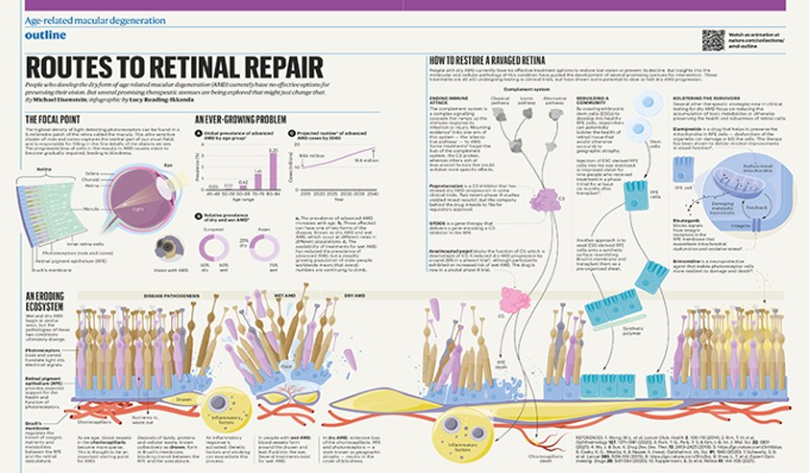
Figure 1.
Conceptual overview of the NeoLocus Reading Protocol.
The central scotoma disrupts foveal fixation, forcing the visual system to adopt a preferred retinal locus (PRL). A relocation prism shifts the visual image toward the PRL. Base-in prisms reduce convergence demand during reading. Additional components including magnification, enhanced illumination, and contrast filters improve visual signal quality and reading performance.
Methods
Microperimetry identifies:
• PRL location
• retinal sensitivity
• fixation stability PRL regions suitable for rehabilitation typically show sensitivity above 12–14 dB.
Step 2 – PRL Relocation Prism
PrismPRL=2Δ×eccentricityPrismPRL=2Δ×eccentricity Example: PRL eccentricity = 4° → 8Δ relocation prism
Step 3 – Base-In Prism Determination
To reduce convergence demand:
BIeye=Add+2ΔBIeye=Add+2Δ
Example:
Add = +4 → 6Δ BI per eye
Step 4 – Prism Vector Combination
Prismtotal=PRL2+BI2Prismtotal=PRL2+BI2θ=tan−1(BIPRL)θ=tan−1(PRLBI)
Additional Components of the NeoLocus Protocol
Magnification compensates for reduced peripheral retinal resolution.
Illumination
Enhanced illumination improves retinal signal detection.
Contrast Filters
Spectral filters improve contrast perception and reduce glare.
Discussion
The NeoLocus Reading Protocol integrates several optical rehabilitation strategies into a unified framework. By combining retinal image relocation with binocular stabilization and signal enhancement, the protocol addresses multiple limitations of reading in patients with central vision loss.
Conclusions
• PRL relocation prisms
• base-in binocular prisms
• magnification
• illumination optimization
• contrast filters
This multi-component approach may significantly improve reading performance in patients with macular disease.